
Stop selling your time: why I build products, not hours
This is the first post in a series of five, excerpted from lessons in business by our founder, Peter Gradwell. They are taken from a YouTube interview he did in the "UK Business Forums" podcast series.
In 1999 I was a software engineering student working an Easter placement at Logica in the City of London. The project was a system to patch an unreliable billing database for Orange mobile — when the database crashed, call-centre agents could alt-tab into our software and activate SIM cards instead, then someone down in Bristol would key the billing info back in overnight. It worked. It also taught me something I've never shaken off.
Logica billed Orange a fortune for our work. I got a sliver of that fortune. Then, after I'd spent close to a year on the project, Orange changed their business logic and canned the whole thing. And I thought: I don't want to do this again. Not sit on the treadmill, writing clever band-aids for other people's problems, and certainly not trade my hours for someone else's margin.
The deeper issue was arithmetic. I remember, back at university, doing the sums on what I could earn doing freelance work in the holidays. Twelve-hour days, no sleep, a generous hourly rate: four thousand pounds for the Easter break. Which was great money for a student in 1997 — and nowhere near enough to build anything with.
"I've never been a good consultant. I don't like being paid per hour for my time. I like being paid for delivering a product — because then you get the leverage. You can sell more products than there are hours in the day, and that's a good way to make a bit more money."
That shift — from hours to products — is the single biggest economic lever an early-stage founder has. Hours are capped at 24 a day, and realistically at 10 billable ones. A product you've already built is available to a thousand customers at once. Both involve work; only one scales.
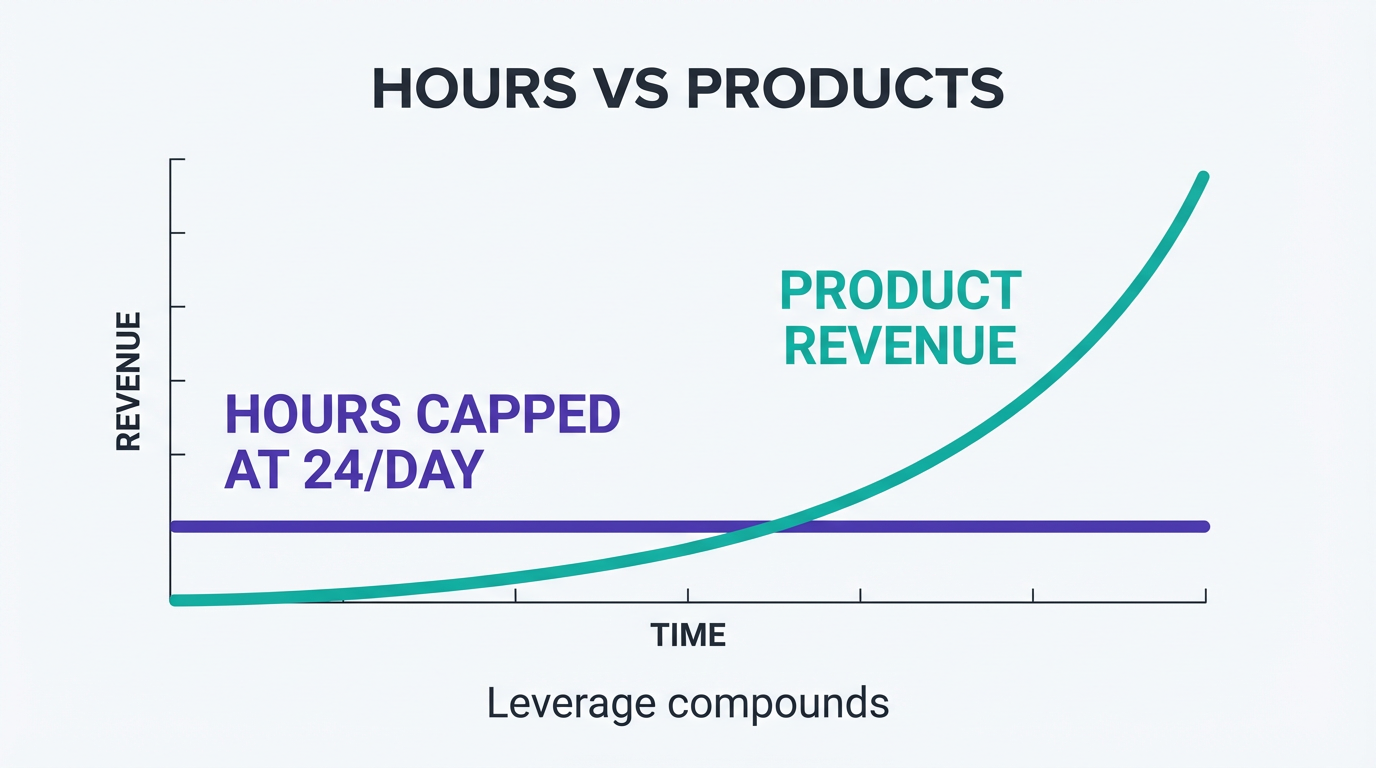
When I started Gradwell.com later that year, the leverage idea was baked in from day one. The first real traction came from offering domain names bundled with hosting at £10 a month on direct debit. Ten pounds a month is a trivial amount. But a thousand £10 recurring direct debits is a £120,000 annual revenue line that ticks over whether I'm at a wedding or asleep on a train, and that's the point. Every hour I spent was an hour invested in a product other people would pay for, over and over, long after the hour was over.
The same principle carried into voice-over-IP a few years later. We didn't sell consultancy; we sold a cloud phone system that ran on a monthly seat licence. When one business wanted ten seats, fine. When a hundred-seat insurance start-up plugged a room full of VoIP phones into our platform, also fine. The platform didn't need ten engineers to scale with them; we'd already done that work.
What this means if you're starting out
Three things I'd tell 1999-me:
- If you're going to trade hours, trade them for equity — not cash. Billing clients by the hour is fine to keep the lights on; doing it forever is a trap. Channel a share of those hours into something reusable from the first month.
- Subscriptions beat one-off sales. A £10 monthly subscription is worth more than a £100 one-off, because the subscription compounds. It also forces you to keep earning the customer's trust, which is the only real moat small businesses have.
- Pick a price point low enough that customers don't need to convene a committee. Retail-priced products sell on autopilot. Enterprise deals sell on relationships, which are — you guessed it — hours.
Years later, when I was thinking about what to do after Gradwell, the same instinct kicked in. I didn't want to be a freelance telecoms consultant. I wanted to productise something — first a SIM-only mobile plan, then a fixed-mobile convergence platform connecting business phones to mobiles. The category changes. The economics don't.
If you take one thing from twenty-two years of running Gradwell.com, it's this: your time is the most expensive, least scalable thing you own. Use it to build products. Let the products do the selling while you sleep.